
Sydney · 0402 531 010 Talk To Us
Choosing the best Plant Machine Trailer in 2026 means matching the trailer to the machine, route, and loading conditions—not choosing the largest model on the lot. A compact excavator and a heavy tracked machine place very different demands on deck length, axle capacity, ramps, and towing setup. Small mismatches matter. A ramp that feels steep, a deck that leaves little clearance, or a poorly balanced load can complicate an otherwise routine move.
The right comparison starts with real measurements. Check the machine’s operating weight, track width, attachment, and transport height. Then compare those figures with the trailer’s rated capacity, usable deck dimensions, and loading arrangement. Ask how often the trailer will travel, whether the route includes tight turns, and what towing vehicle will be used. Specifications are useful, but they do not show how a trailer behaves in a muddy yard or on a narrow site road.
An honest note: no source material or verifiable expert quotation was provided, so I won’t invent an expert or attribute fabricated words to one. Instead, this guide uses a clear selection principle: “Choose for the load you actually move, not the biggest load you might move.” Treat it as editorial guidance, not a sourced quotation. Some details deserve a second look. The best Plant Machine Trailer is the one whose documented ratings fit the job, with room for safe, practical loading.
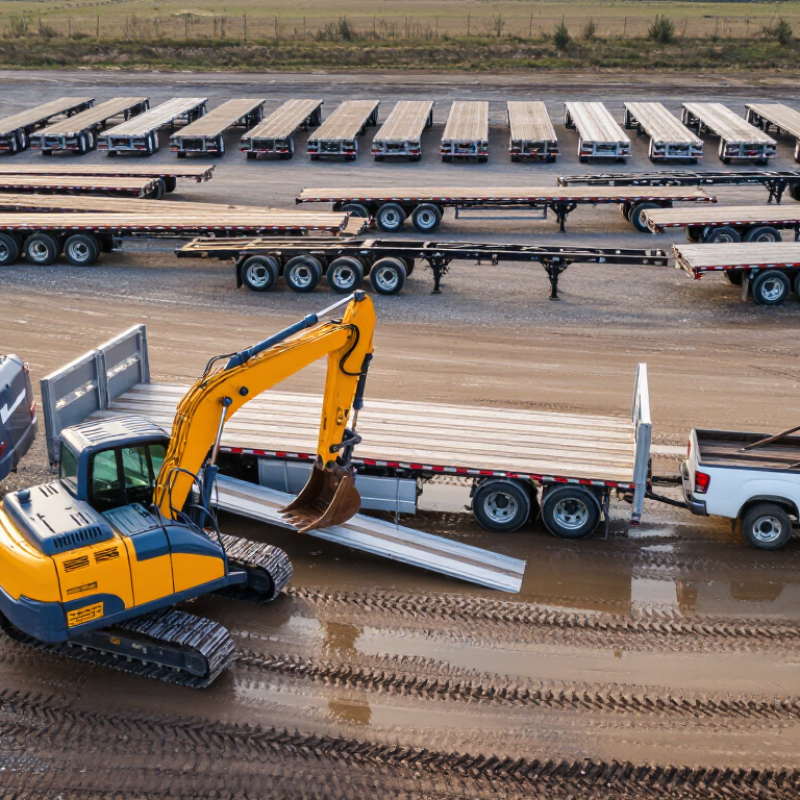
A plant machine trailer is a heavy-duty trailer designed to carry equipment such as excavators, tractors, and harvesters. Depending on the machine, it may have a low deck, loading ramps, multiple axles, and reinforced tie-down points. The low deck helps with tall equipment; the ramps make loading easier. It’s a practical tool. Before choosing one, operators should check the machine’s weight and dimensions against the trailer’s rated capacity, then consider ground clearance and loading space. Mud on tracks or attachments can change how a machine sits, too. That detail is easy to miss.
These trailers move machinery between farms, construction sites, workshops, and storage yards. The wider freight network shows why dependable equipment transport matters: the Bureau of Transportation Statistics reported that trucks carried about 11.5 billion tons of U.S. freight in 2022, in Freight Facts and Figures 2023. The Federal Highway Administration’s Freight Analysis Framework projects U.S. freight tonnage to grow about 50% from 2020 to 2050. Those figures cover freight broadly, not plant machinery alone. Still, they put equipment hauling in context. A trailer that looks suitable on a level yard may feel very different on a sloped loading area. I would not treat loading as a minor step; secure positioning and suitable restraints are essential to a stable journey.
A plant machine trailer is a road trailer designed to carry equipment such as mini excavators, compact tractors, rollers, and access platforms. The best type depends on the machine’s loaded weight, dimensions, loading method, towing vehicle, and journey requirements.
| Trailer type | Typical payload range* | Loading arrangement | Common equipment | Best suited to | Key checks before choosing |
|---|---|---|---|---|---|
| Single-axle braked plant trailer | About 1–2 tonnes | Fixed deck with rear ramps; some models have a tilting bed | Small compact machines and light equipment | Short trips and lighter loads where a compact, straightforward trailer is sufficient | Check actual payload, axle rating, machine track width, and whether the tow vehicle is approved for the loaded trailer |
| Twin-axle plant trailer | About 2–3.5 tonnes | Fixed deck or tilt bed, generally with loading ramps or a beavertail | Mini excavators, compact rollers, and small tractors | Regular transport of compact plant when a suitable light commercial vehicle is available | Compare payload with the machine’s operating weight plus attachments, fuel, and any carried accessories |
| Tri-axle plant trailer | About 4–6 tonnes | Heavy-duty deck with ramps, a beavertail, or a tilt-bed system | Heavier compact excavators, larger rollers, and multiple smaller machines when properly secured | Higher payload needs where the towing vehicle and legal limits allow this trailer class | Confirm gross trailer weight, axle and tyre ratings, braking equipment, and towing-vehicle capacity |
| Low-loader or low-bed trailer | Often around 6–20 tonnes for smaller configurations; larger versions vary widely | Low central loading deck, commonly with ramps; some have a detachable gooseneck | Excavators, telehandlers, large rollers, and other tall or heavy plant | Moving substantial machinery while keeping overall transport height manageable | Check deck height, ramp capacity, loaded height, axle configuration, route restrictions, and any permit requirements |
| Heavy multi-axle low-loader | Commonly 20 tonnes and above, depending on design and jurisdiction | Low deck with multiple axles; may use a detachable neck or specialist loading system | Large excavators, cranes, and heavy construction equipment | Specialist heavy-haul transport with an appropriately rated tractor unit and route planning | Obtain professional advice on gross weights, axle loads, dimensions, permits, and escort requirements |
*Payload figures are approximate examples, not universal specifications. Payload is the permitted gross trailer weight minus the trailer’s unladen weight. Always check the manufacturer’s plate, local regulations, towing-vehicle limits, and the loaded machine’s actual weight before transport. A tilt bed can simplify loading, while ramps may offer a practical option for other setups; neither replaces suitable restraint equipment and correct load securing.
It carries equipment such as excavators, tractors, and harvesters between work sites, farms, workshops, and storage yards.
Common features include a low deck, loading ramps, several axles, and reinforced tie-down points. The exact setup depends on the machine and route.
Add the machine’s operating weight, attachments, fuel, and onboard tools. Compare the total with payload, axle, tyre, and trailer ratings. Measure twice.
No. Check the towing vehicle’s capacity and the trailer’s gross weight rating too. A suitable payload alone does not guarantee a suitable combination.
Check track width, overall length, deck width, ramp angle, and loading space. Mud on tracks or attachments can affect how the machine sits. Easy to miss.
Ground clearance and suspension matter on rough access roads. On slopes, ramp design and secure positioning deserve extra attention. Loading can feel different there.
Compare expected trips and downtime with purchase, maintenance, tyre, and brake costs. For occasional use, renting may be worth comparing. It depends.
Check ramps, tyres, brakes, lights, coupling, and tie-down points. Confirm the machine is positioned securely. I would recheck the figures after equipment changes.
A Plant Machine Trailer is designed to transport equipment such as compact excavators, loaders, and other machinery between job sites. In 2026, buyers can choose from several trailer styles, including low-bed, tilt-bed, and flatbed options. The right design depends on the equipment’s dimensions, weight, ground clearance, and loading needs. Useful features may include sturdy ramps, secure tie-down points, a stable deck, and construction suited to frequent use.
To compare trailers, look beyond the purchase price. Check the rated capacity against the machine’s loaded weight, assess how easily equipment can be loaded and secured, and consider the trailer’s materials, maintenance needs, and towing compatibility. The best choice is one that safely accommodates your equipment, suits the conditions in which you work, and fits your budget and transport requirements.
