
0%

Choosing the best China Expandable Container Trailer requires more than comparing prices and photographs. The right model must match your container sizes, road conditions, loading equipment, and daily transport volume. An Expandable Container Trailer should provide stable support when extended, yet remain practical during storage and highway travel.

Experienced buyers inspect the frame, locking points, suspension, axles, tires, and hydraulic or mechanical extension system. Ask for load test records, material specifications, welding details, and clear maintenance instructions. A trailer may look strong in a catalog but feel different under real working pressure. Small details matter, such as reinforced corner fittings, protected hydraulic lines, and accessible grease points.

Supplier reliability deserves equal attention. Review manufacturing experience, export references, inspection procedures, spare-parts availability, and response times after delivery. Confirm that the trailer configuration suits your local road requirements and applicable transport standards. Independent inspection can reveal uneven welds, poor paint preparation, or unclear component origins before payment.

No trailer is perfect. A cheaper option may reduce the initial budget but increase downtime later. A heavier design may improve durability while reducing payload efficiency. Even experienced purchasers can overlook these trade-offs. Compare total operating cost, not only the purchase quotation. This guide explains the practical criteria for selecting a dependable China Expandable Container Trailer, while recognizing that the best choice depends on your cargo workflow, fleet capacity, and long-term service expectations.
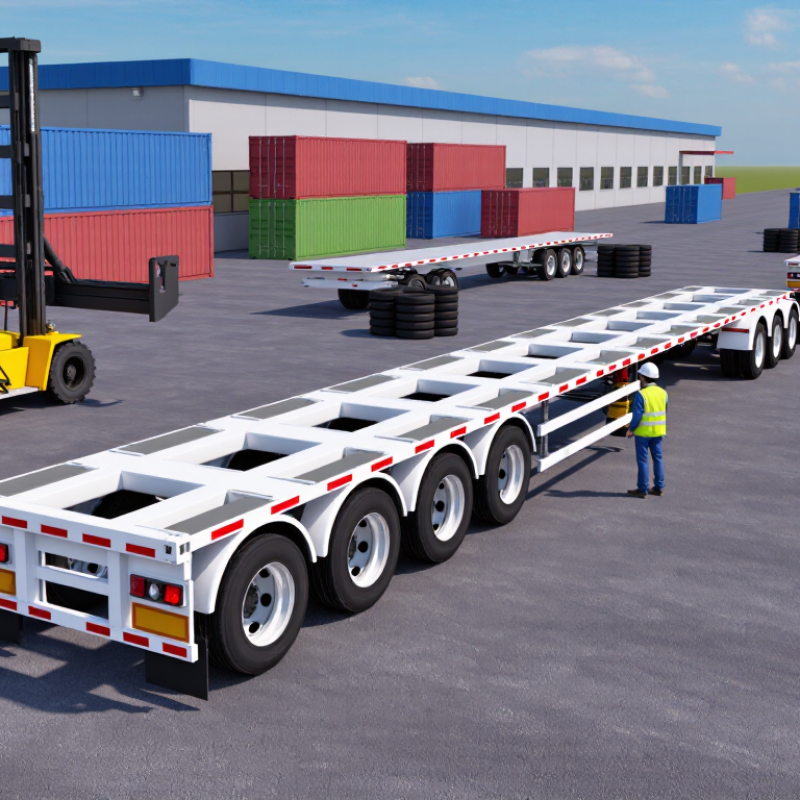
How to Choose the Best China Expandable Container Trailer?

Define Compatible Loads: ISO 668 Covers 20-, 40- and 45-ft Containers

Choosing a China expandable container trailer starts with the load, not the paint or brochure. ISO 668 provides a useful reference for Series 1 freight container dimensions and ratings. It covers common 20-, 40-, and 45-foot units. Yet “45-foot” does not mean every container has identical overhang or equipment. Check corner casting positions, external dimensions, and gross mass before ordering.

An adjustable chassis should lock firmly at each required position. Confirm that its twist-locks align with the specified corner castings. Request drawings showing the retracted and extended wheelbase. Measure kingpin load, axle spacing, and rear overhang with a realistic container load. A 20-foot unit may sit centrally, while a 40-foot container can shift weight toward the rear. 45-foot equipment needs extra clearance during turns. Small details matter. Also verify payload, suspension capacity, brakes, lighting, and corrosion protection.

From practical inspections, compatibility often fails at the interface, not the frame. Operators may test an empty container and overlook cargo-induced deflection. That is a weak check. Use reliable container data, weigh the loaded combination, and compare results with applicable road limits. Regional requirements can differ, so identify the intended route and operating conditions. I would request a trial fit with each target length. It can reveal locking gaps, tire interference, or an awkward loading angle before regular service.

Validate Gross Mass: A Standard 20-ft ISO Unit Is Rated at 30,480 kg

How to Choose the Best China Expandable Container Trailer?

Validate Gross Mass: A Standard 20-ft ISO Unit Is Rated at 30,480 kg

A standard 20-foot ISO container is commonly rated for a maximum gross mass of 30,480 kg under ISO 668. This figure includes the container, cargo, pallets, and securing equipment. Do not treat it as the trailer’s legal payload. The trailer frame, axles, tires, kingpin, and fifth wheel must also support the intended load.

The SOLAS Verified Gross Mass requirement places responsibility on the shipper to declare accurate container weight before loading. The International Maritime Organization confirms that a packed container cannot be loaded for international sea transport without verified gross mass. UNCTAD’s Review of Maritime Transport 2024 also shows the continuing scale of global container transport, making weight accuracy a daily operational issue. A 200-kilogram error may seem small. It is not, especially near axle limits.

Tips: Ask the supplier for axle ratings, tare weight, kingpin capacity, and a certified load test. Check the rating plate, not only the sales sheet. Weigh the complete trailer and container together when possible. Road limits can be lower than the ISO rating, and this is where many purchasing decisions become imperfect. Confirm local axle regulations before choosing an expandable design. Examine locking pins, extension beams, brake systems, and weld quality after repeated loading cycles. A trailer that looks strong may still distribute weight poorly.

Check Container Interfaces: ISO 1161 Corner Castings and CSC Plate Data

How to Choose the Best China Expandable Container Trailer?

A dependable expandable container trailer starts at the interfaces, not the paint or axle count. ISO 1161 defines the dimensions, geometry, and load-transfer requirements for container corner castings. These castings must seat cleanly on the trailer’s twist locks, without forced alignment or visible gaps. Check every lock by hand. A loose handle is a small warning, but not a harmless one.

The CSC plate is equally important. Under the IMO International Convention for Safe Containers, it records the container identification, maximum gross weight, allowable stacking load, and racking test value. Compare these figures with the trailer’s rated capacity and operating configuration. UNCTAD’s Review of Maritime Transport 2024 reported global maritime trade growth of 2.4% in 2023, showing why equipment may face frequent interchange and repeated loading cycles. That pressure exposes weak interfaces quickly.

Ask the manufacturer for dimensional inspection records, weld inspection evidence, and corrosion-control details. The corner casting should remain square after extension sections are deployed. Measure it. Do not rely only on photographs. In field checks, I have seen apparently minor twist-lock misalignment create uneven contact across four corners. The trailer still moved, but the condition deserved rejection. Manufacturer documents can also contain mistakes, especially when translated. Verify CSC data against the container plate and the applicable ISO drawings before purchase. A cheaper trailer may pass a visual check and still fail the practical one.

How to Choose the Best China Expandable Container Trailer? - Check Container Interfaces: ISO 1161 Corner Castings and CSC Plate Data

A practical, brand-neutral inspection table for verifying container compatibility, structural information, and compliance before selecting an expandable container trailer.

Inspection Dimension Reference or Data Point What to Check on the Trailer or Container Acceptance Guidance Required Evidence
Container interface standard ISO 1161, Series 1 freight-container corner fittings Confirm that the trailer's twistlocks are designed to engage standard container corner castings at the required top or bottom positions. The interface should be explicitly specified for ISO Series 1 containers, with no dependence on a proprietary corner-fitting design. Technical drawing, interface specification, and photographs of the locking arrangement.
Number of locking points Standard container handling normally uses four corner locations for one container unit. Count the locking devices used for each supported container configuration. Check whether the expandable frame adds or removes any required locking point. All required corner locations must be positively locked, accessible, and mechanically restrained during transport. Locking-point layout drawing and functional demonstration with a compatible test container.
Corner-casting engagement ISO 1161-compatible top and bottom apertures Inspect twistlock head entry, rotation, seating depth, and contact with the corner-casting load-bearing surfaces. The locking head must fully enter and rotate into the casting without forcing, partial engagement, or contact with non-load-bearing sheet metal. Close-up inspection images, dimensional drawing, and a complete lock/unlock test record.
Corner-casting condition Common nominal corner-fitting envelope is approximately 178 × 162.5 × 118 mm; certified drawings control tolerances. Check for cracks, deformation, excessive wear, blocked apertures, weld damage, and distortion around the eight container corner castings. Do not approve a connection based only on nominal dimensions. Damaged or distorted castings require repair or replacement before loading. Inspection checklist, photographs, and repair or replacement records where applicable.
Twistlock locking status Mechanical positive lock with a clear locked/unlocked indication Verify the handle position, locking pin or indicator, anti-release feature, and clearance from the container frame. The lock must remain in the secured position under vibration and must not be capable of accidental rotation during normal road operation. Operating instructions, safety-label photographs, and lock-cycle test results.
Expandable-frame position Retracted and extended positions must retain the specified container interface geometry. Measure the longitudinal and transverse locations of the twistlocks in every operating configuration intended for use. Each approved configuration must align with all container corner castings without side loading, forced fit, or interference with landing gear, axles, or chassis members. Dimensioned drawings for each position and an on-container fit test in every configuration.
Container length compatibility Typical ISO container lengths include 20 ft and 40 ft; 45 ft units require specific approval and geometry. Confirm which container lengths and corner-spacing arrangements are supported by the expandable trailer. The supplier should state supported lengths separately rather than describing the trailer only as “universal.” Compatibility matrix showing supported lengths, corner positions, and maximum permitted load.
CSC safety approval plate Convention for Safe Containers (CSC), Safety Approval Plate Check that the container carries a legible, permanently affixed CSC plate or equivalent approved safety-marking information. The plate should be securely attached, readable, and consistent with the container identification and inspection status. Clear photograph of the complete plate and the container identification marking.
Maximum gross mass CSC plate field: maximum operating gross mass, normally stated in kilograms and pounds. Compare the plate value with the trailer's rated payload, axle limits, kingpin or coupling limit, and local road regulations. The permitted combination is governed by the lowest applicable limit; never use the CSC maximum gross mass alone as the trailer payload rating. CSC plate data, trailer rating plate, axle certificates, and route-specific legal-weight calculation.
Allowable stacking load CSC plate field: allowable stacking load for the container structure. Record the value shown on the plate and compare it with the handling and stacking assumptions of the intended cargo operation. This value describes container structural capability and does not increase the legal payload or trailer capacity. CSC plate photograph and structural or handling specification.
Transverse racking test force CSC plate field: transverse racking test force, where included by the approval marking. Check whether the plate contains the required structural test information and whether the value is legible. Missing, altered, or unreadable approval data should be resolved through the responsible inspection or certification authority before use. Plate photograph, approval documentation, and inspection authority records.
Manufacture and identification data CSC plate commonly includes approval number, date of manufacture, container identification, and applicable technical values. Verify that the identification on the plate matches the container markings and shipping or purchase documents. All identification data should be consistent; mismatched or overwritten information is a traceability risk. Plate photograph, container number photograph, and equipment documentation.
Periodic examination status CSC inspection information may use a periodic examination date or an approved continuous examination program marking. Check the next examination date where applicable, or verify the current examination-program status and inspection records. The container should have valid examination status before being transported on the selected trailer. CSC plate, inspection decal or marking, and current examination record.
Load distribution Trailer payload must be evaluated together with axle-group, coupling, and container center-of-gravity limits. Confirm that the expandable layout keeps the container load within permitted axle loads and does not create excessive frame or twistlock loading. Use a documented load-distribution calculation for each supported container length and extension position. Load chart, axle-load calculation, engineering report, and weighbridge procedure.
Final selection decision Interface compatibility + structural data + legal operating limits Review ISO interface fit, all locking points, expandable positions, CSC data, payload, axle limits, and inspection traceability as one package. Select the trailer only when the complete configuration is documented and verified; a visual match alone is insufficient. Signed pre-purchase inspection report and complete technical-document package.
Important: ISO 1161 corner-fitting compatibility does not by itself confirm safe transport. Final approval should also consider the container's CSC status, trailer structural rating, axle and coupling limits, local road regulations, and the manufacturer's certified drawings.

Compare Extendable Chassis: Closed/Open Length, Axle Loads and Turning Space

How to Choose the Best China Expandable Container Trailer?

Compare Extendable Chassis: Closed/Open Length, Axle Loads and Turning Space

An expandable container trailer should match your daily cargo mix, not just its maximum reach. In the closed position, measure total length, rear overhang, and coupling clearance. A shorter chassis stores more easily and turns better in crowded yards. When extended for 45-foot containers, the frame needs enough overlap and locking points. UNCTAD’s Review of Maritime Transport 2023 states that about 80% of global merchandise trade by volume moves by sea. Container flexibility is therefore useful, but poor geometry creates delays at the gate.

Axle capacity requires closer checking. Do not select axles from the advertised payload alone. Calculate container weight, chassis tare, kingpin load, and uneven cargo distribution. Then compare the result with local road limits and the manufacturer’s axle rating. China’s GB 1589 framework controls vehicle dimensions and mass, while European Directive 96/53/EC sets an 11.5-tonne limit for a single powered axle. These rules are not interchangeable. A certified weighbridge test is essential.

Turning space is often underestimated. Measure the inner turning radius, swept path, and tail swing with the chassis both closed and open. ISO 14791 provides a recognized method for evaluating heavy-vehicle swept paths. A long wheelbase may improve stability, yet it can scrape curbs in a narrow depot. I have seen drawings look perfect, then fail during a tight reverse maneuver. Leave practical clearance, not only theoretical clearance. Real yards are rarely level, empty, or perfectly marked.

Assess Road Compliance: Match GB 1589-2016, Local Mass Limits and Axle Counts

Choosing the best China expandable container trailer starts with road compliance, not expansion length. The trailer must match GB 1589-2016 requirements and the rules of each operating region. Check the complete vehicle dimensions in both retracted and expanded positions. Measure width, height, rear overhang, and axle spacing after loading.

Mass limits deserve careful attention. A trailer may meet the national standard but exceed a city’s bridge limit or a specific road’s axle-load restriction. Confirm the permitted gross mass, container weight, and tractor-trailer combination before purchase. Ask for clear axle ratings and a reliable weight-distribution plan. Small errors matter.

Count the axles carefully.

Axle numbers affect legal mass, maneuverability, tire wear, and toll classification. More axles do not automatically solve every compliance issue. Their spacing and load sharing must also suit local requirements. During inspections, uneven cargo placement can overload one axle even when the total weight appears acceptable. That detail is easy to miss.

A practical review should include drawings, certified dimensions, load calculations, and actual scale testing. Speak with local transport authorities or a qualified compliance engineer when routes cross provinces. Regulations and enforcement practices can change. A paperwork-only review is not enough. Rechecking measurements after expansion may feel repetitive, but it can prevent costly route restrictions, delays, and forced unloading.

FAQS

What gross mass can a standard 20-foot container carry?

A standard 20-foot unit is commonly rated at 30,480 kilograms gross mass. This includes the container, cargo, pallets, and securing equipment. It is not the trailer’s legal payload. Check the trailer frame, axles, tires, kingpin, and fifth wheel separately.

Why must container weight be verified before shipping?

The shipper must declare the container’s verified gross mass before international sea transport. A 200-kilogram error can become dangerous near axle limits. Weigh the loaded container whenever possible. Do not estimate from paperwork alone.

Which trailer details should buyers request?

Request axle ratings, tare weight, kingpin capacity, and certified load-test results. Check the rating plate carefully. Sales sheets may contain incomplete or translated information. Documents can be wrong.

How should the container locks and corner castings be checked?

Each corner casting should sit cleanly on its twist lock. There should be no forced alignment or visible gaps. Check every lock. A loose handle is a warning sign. Inspect all four corners after extension.

What information should be checked on the container safety plate?

Compare the container’s identification, maximum gross weight, stacking load, and racking value. These figures should match the trailer’s rated capacity and operating position. Verify the plate directly. Do not rely only on photographs.

How can a buyer test an expandable trailer’s structure?

Measure the frame when retracted and expanded. Check extension beams, locking pins, welds, and corrosion protection. Confirm that the corner castings remain square after deployment. Repeated loading can reveal weaknesses that a new trailer hides.

How do road regulations affect trailer selection?

Check complete dimensions in both positions, including width, height, rear overhang, and axle spacing. National limits may differ from city or bridge restrictions. Confirm local gross-mass and axle-load rules before purchase. A legal design on paper may still fail on a specific route.

Do more axles always improve compliance?

No. Axle count affects legal mass, maneuverability, tire wear, and toll classification. Spacing and load sharing matter too. Uneven cargo can overload one axle while total weight appears acceptable. Count carefully. Then measure the actual load distribution.

What final checks should be completed before purchase?

Review drawings, certified dimensions, load calculations, and scale-test results. Inspect the complete trailer and container together when possible. Ask a qualified local compliance specialist about cross-region routes. I would recheck measurements after expansion, even if it feels repetitive.

Conclusion

Choosing the right Expandable Container Trailer starts with matching the trailer to the containers and operating conditions it will encounter. First, define compatible loads by confirming whether the design supports standard ISO 20-, 40-, and 45-foot containers. Then validate the expected gross mass; a standard 20-foot ISO container is commonly rated at up to 30,480 kg, although the actual operating limit must also consider the trailer, cargo, and road regulations. Checking the container’s ISO 1161 corner castings and CSC plate data helps ensure secure connection and reliable load information.

When comparing extendable chassis, examine closed and open lengths, axle-load distribution, available turning space, and ease of adjustment. Finally, assess road compliance by comparing the trailer configuration with GB 1589-2016, applicable local mass limits, and permitted axle counts. A careful evaluation of these factors improves safety, compatibility, maneuverability, and long-term operating efficiency.

Ethan

Ethan

Ethan is a professional marketing specialist dedicated to helping businesses understand products, markets, and customer needs through clear, practical, and reliable content. With a strong understanding of the company’s product portfolio, service standards, and industry direction, he regularly......