
Modular Construction Site Accommodation has become a practical option for projects that need dependable facilities on tight schedules. Workers need more than a roof: they need clean sleeping rooms, working showers, safe electrical systems, and spaces that remain comfortable through changing weather. A supplier’s design, delivery, and after-sales support can shape daily site operations.
The business case deserves a careful look. McKinsey’s 2019 report, Modular construction: From projects to products, says modular methods could reduce construction timelines by 20–50% and costs by up to 20% under suitable conditions. These are potential gains, not promises. Transport distance, ground preparation, utilities, and local site conditions can change the result. A neat factory finish does not solve every problem.
This guide explores China’s leading modular construction site accommodation suppliers and the details buyers should compare. Look beyond brochure images. Check room layouts, insulation, fire-safety documentation, production capacity, delivery experience, and spare-parts support. Ask how a supplier handles late design changes. Ask for references from projects with similar climates and workforce sizes. Small details matter: a leaking shower or poorly placed socket can disrupt a whole shift.
There is no perfect supplier for every project. Sometimes the lowest quote is not the best value; sometimes a premium specification is simply unnecessary. Comparing verified capabilities, clear quotations, and realistic delivery plans can help project teams make a more grounded choice.
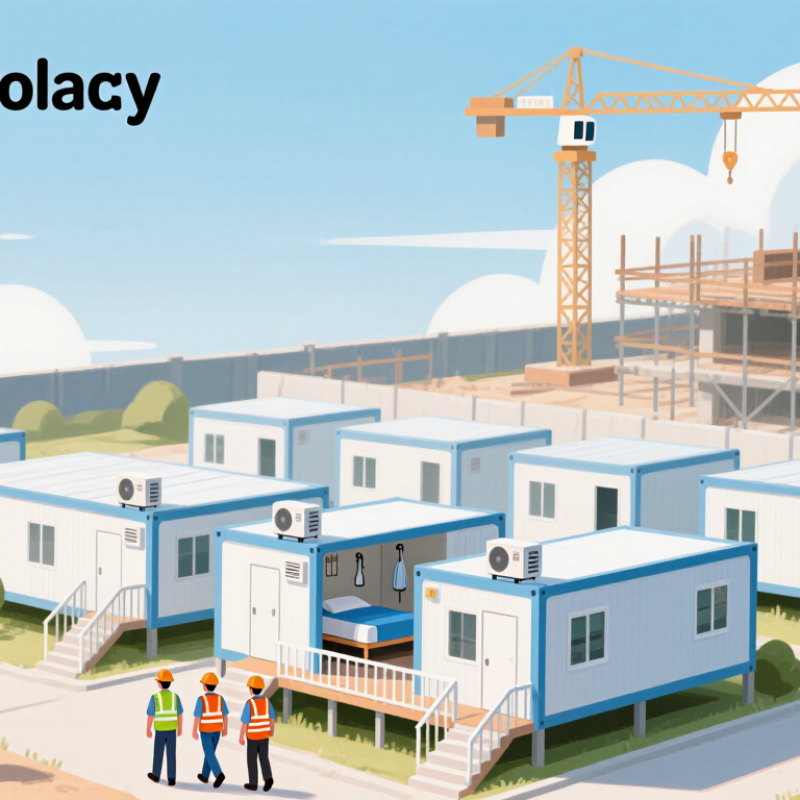
Modular construction site accommodation is a group of factory-built rooms used to support workers near an active project. Units may serve as offices, changing rooms, rest areas, or temporary sleeping quarters. They are transported to the site and connected or arranged to fit available space. This can reduce on-site building work and make facilities easier to relocate as a project changes. A crew needs a dry place to plan, store drawings, and take breaks.
Core features include a stable frame, weather-resistant panels, secure doors, and practical interior finishes. Electrical outlets, lighting, heating, cooling, and plumbing depend on the unit’s purpose and site conditions. Insulation helps manage temperature, while ventilation limits stale air in busy rooms. Clear walkways and accessible storage matter when workers carry tools or protective equipment. Small details count.
Suppliers and project teams should check transport access, ground conditions, utility connections, and expected occupancy before choosing a layout. A unit that fits on a drawing may be awkward beside a narrow access road. Modular accommodation is not automatically comfortable; poor ventilation or cramped entry space can frustrate people every day. Real site feedback should guide adjustments, even when the original plan looks tidy.
China’s modular site-accommodation suppliers operate within a broad construction ecosystem. The National Bureau of Statistics recorded construction output of 31.59 trillion yuan in 2023. That figure signals industrial scale, but it does not measure accommodation-module production. Suppliers commonly specialize in steel frames, insulated panels, electrical systems, plumbing, or interior fit-outs. Some coordinate several stages; others supply components to a main contractor. This split affects lead times, quality checks, and responsibility when modules arrive on site. Details matter.
The Ministry of Housing and Urban-Rural Development reported about 1.3 billion square metres of prefabricated buildings in 2022, representing 26.2% of new building construction. The figure indicates wider acceptance of off-site production, not demand for temporary accommodation alone. A practical supplier review should check module dimensions, fire and thermal specifications, lifting points, connection details, and replacement-part availability. Ask for documented inspection records and a clear scope of work. One limitation remains: public statistics rarely separate site-camp units from other prefabricated buildings. Buyers should compare like with like, especially when evaluating quoted delivery times and factory capacity.
| Supplier Segment | Typical Products and Services | Role in the Supply Chain | Common Delivery Model | Typical Project Fit | Key Procurement Checks |
|---|---|---|---|---|---|
| Modular Building Manufacturers | Factory-built steel-framed modules, prefabricated rooms, accommodation blocks, offices, and sanitary units. | Produce the main building modules and may coordinate layout design, factory assembly, and dispatch. | Direct purchase, project-specific production, or supply through a construction contractor. | Projects requiring repeatable units, predictable factory production, or phased accommodation capacity. | Confirm structural design basis, material specifications, fire-safety provisions, production quality controls, and applicable local code requirements. |
| Container-Based Accommodation Suppliers | Container-style rooms and site units configured for sleeping, offices, dining, changing, or sanitation. | Supply standardized transportable units that can be combined or arranged into temporary site facilities. | Purchase or rental, with transport and installation arranged separately or included in the package. | Temporary construction camps, short-term projects, and sites where units may need to be relocated. | Check unit dimensions, insulation, ventilation, interior finishes, lifting points, transport limits, and connections for utilities. |
| Design-and-Build Integrators | Facility planning, module coordination, foundations, utility interfaces, installation, and project handover. | Coordinate multiple work packages and provide a more integrated route from site requirements to completed facilities. | Turnkey or multi-package contracts, depending on project scope and division of responsibilities. | Projects needing coordinated accommodation, offices, welfare areas, and supporting site infrastructure. | Clarify design responsibility, scope boundaries, interface management, site works, commissioning, and handover documentation. |
| Rental and Temporary-Facility Operators | Rental fleets of modular rooms or container units, with options for delivery, setup, maintenance, and removal. | Provide temporary capacity without requiring the project owner to purchase every unit. | Short-term or long-term rental, commonly with transport, installation, and return terms defined in the contract. | Time-limited projects, changing workforce levels, and situations where ownership after project completion is not required. | Review fleet condition, availability, rental duration, damage terms, maintenance responsibilities, and collection arrangements. |
| Building-Material and Component Suppliers | Steel sections, sandwich panels, doors, windows, flooring, insulation, and electrical or plumbing components. | Supply inputs used by modular manufacturers, contractors, or local fabricators rather than delivering complete accommodation facilities. | Component orders against technical specifications, production schedules, and delivery requirements. | Projects with in-house assembly capability or a need to source replacement and project-specific components. | Verify product specifications, compatibility with the selected system, test documentation, batch consistency, and delivery lead times. |
| Transport and Installation Contractors | Loading, road transport, unloading, crane placement, module positioning, and site assembly support. | Connect factory output with the project site and help complete installation logistics. | Standalone logistics contract or a service package arranged by the manufacturer or project contractor. | Projects involving oversized loads, restricted site access, multi-unit placement, or time-sensitive installation. | Assess route and access constraints, lifting plans, site readiness, permits where required, insurance, and responsibility for installation interfaces. |
Chinese modular construction site accommodation suppliers typically offer more than basic sleeping cabins. Their portfolios often include flat-pack rooms, expandable units, office blocks, canteens, washrooms, and security booths. Some provide insulated wall and roof panels, steel frames, doors, windows, wiring, plumbing, and interior fixtures as coordinated packages. Details matter.
Portfolio depth varies. A supplier may fabricate the modules but outsource electrical work or site installation. Buyers should check drawings, insulation specifications, loading plans, and what the quoted package excludes. A sample bathroom is useful: inspect floor drainage, pipe access, and the finish around wall joints. Small defects can become costly on a busy site.
China’s Ministry of Housing and Urban-Rural Development reported 721 million square metres of newly started prefabricated buildings in 2023, about 24.9% of new construction area. This broader sector figure does not measure accommodation suppliers specifically, but it signals substantial domestic manufacturing experience.
McKinsey’s 2019 report, Modular construction: From projects to products, noted that modular methods can reduce construction time by 20–50% and costs by up to 20% in suitable projects. Results vary. I would not treat those figures as a promise for every remote site.
China’s modular construction site accommodation suppliers support projects with repeatable factory production and coordinated delivery. Their manufacturing capability affects more than price. It shapes dimensional accuracy, finish quality, and how quickly units can be connected on site. Buyers should ask how steel frames are checked, how wall panels are sealed, and whether electrical and plumbing routes are inspected before dispatch. Small gaps matter. A poorly aligned door can become a daily problem in a busy camp.
Customization should respond to real site conditions, not just appearance. A supplier may adjust room layouts, insulation levels, window positions, washroom counts, and corridor widths. For a cold, windy site, insulated panels and sealed joints deserve close attention. For a hot region, shading and ventilation can make rooms more usable. Not every custom feature improves performance. Extra fittings may complicate maintenance, so teams should compare each change with the project’s schedule and operating needs.
Site installation depends on clear drawings, prepared foundations, lifting access, and a realistic delivery sequence. Experienced installation teams check module levels, connection points, and service interfaces before completing internal finishes. They should also explain what the client must prepare, such as power supply locations and drainage connections. One detail is often underestimated: weather can delay lifting work. Even a capable supplier cannot remove that risk, and installation plans sometimes need revision when the ground or access route changes.
When comparing China-based modular construction site accommodation suppliers, start with the conditions workers will actually face. Ask how wall and roof insulation, ventilation, window seals, and drainage suit the project’s climate. A sample room can reveal details drawings miss. Check bed layouts, storage, lighting, washroom access, and cleaning surfaces against expected occupancy and shift patterns. Practical details matter.
Review engineering documents, quality-control records, and delivery plans before comparing prices. Ask how each supplier checks dimensions, electrical systems, and plumbing before dispatch. Request references for projects with similar site access, weather, and capacity. Confirm what the quotation includes, such as foundations, stairs, installation, and utility connections. A low quote can look convincing. The exclusions may be extensive.
Compare the full operating cost, not only the module price. Freight, lifting equipment, assembly time, maintenance, and replacement parts can change the budget. Ask for realistic production and delivery dates, then clarify how delays or damaged components are handled. Notice how promptly the supplier answers specific questions. No scorecard captures every site condition, and buyers can overlook small issues; a door swing or poorly placed socket may frustrate occupants daily. Check proposed layouts on the actual site plan before approval.
Construction output reached 31.59 trillion yuan in 2023. It shows industry scale, not accommodation-module production. Details matter.
No. About 1.3 billion square metres of prefabricated buildings were reported in 2022. That covered many building types, not just temporary accommodation. Not enough alone.
Check module dimensions, fire and thermal specifications, lifting points, and connection details. Ask for inspection records and replacement-part availability.
It can reveal insulation, ventilation, window seals, and drainage issues. Check bed layouts, storage, lighting, and washroom access. Drawings can miss things.
Compare the layout with occupancy, shift patterns, and the actual site plan. A door swing or misplaced socket can frustrate people daily. Easy to overlook.
Confirm whether foundations, stairs, installation, and utility connections are included. A low price may exclude important work.
Include freight, lifting equipment, assembly time, maintenance, and replacement parts. The module price is only part of the budget.
Review quality-control records for dimensions, electrical systems, and plumbing. Ask for realistic dates and clear plans for delays or damaged components.
Request references for projects with similar site access, weather, and capacity. Prompt answers help, though no scorecard captures every site condition. I would still check the details twice.
Modular Construction Site Accommodation provides practical, adaptable spaces for workers and project teams, combining rapid deployment with essential functions such as sleeping areas, offices, dining rooms, and sanitation facilities. In China, the supplier landscape includes manufacturers with different production scales, product ranges, and levels of project support. Comparing suppliers involves looking beyond basic unit prices to understand how their offerings fit a project’s location, workforce size, schedule, and operating conditions.
A reliable supplier should be able to explain its manufacturing standards, customization options, delivery arrangements, and installation process. Buyers can assess factors such as structural quality, insulation, layout flexibility, durability, safety provisions, after-sales support, and the supplier’s capacity to meet project deadlines. Careful evaluation of these capabilities helps construction teams select accommodation that is functional, cost-effective, and suited to changing site requirements.