Navigating Heavy Transport Engineering in the Netherlands: Regulatory & Technical Manual
The Netherlands serves as the premier gateway for European heavy logistics, anchoring continental freight via the Port of Rotterdam, Schiphol logistics corridors, and an intricate network of highways (A1, A4, A15, A27). However, executing super-heavy haulage and abnormal load operations across Dutch territory presents singular engineering challenges. High population density, strict infrastructure protection policies enforced by Rijkswaterstaat, and rigid vehicle registration requirements managed by the RDW (Rijksdienst voor het Wegverkeer) demand specialized transport trailers designed specifically for compliance and maximum operational efficiency.
As a global OEM transport trailer factory specializing in heavy-duty lowbeds, extendable flatbeds, and multi-axle modular trailers, our engineering department designs trailers that strictly align with Dutch and European Economic Area (EEA) type approvals under Directive 2007/46/EC and Regulation (EU) 2018/858.
Information Gain Insight: Dutch heavy transport permits (VWW / Ontheffingen) impose dynamic axle load calculations based on bridge bending moment indices. Utilizing our S690QL high-tensile steel frame configurations reduces tare weight by up to 18% compared to standard Q345B steel trailers, directly converting frame mass reduction into legal payload capacity under Dutch road laws.
1. Axle Load Optimization & RDW Compliance (Aslasten Limits)
In standard commercial logistics within the Netherlands, maximum gross vehicle weight (GVW) is capped at 50 Tonnes for standard combinations. However, abnormal transport (Speciaal Transport) routinely demands payloads ranging from 40 Tonnes to over 200 Tonnes. To achieve approval for an Ontheffing (special permit) from Rijkswaterstaat, trailer configurations must distribute weight cleanly across multiple axle lines to avoid exceeding maximum ground pressure limits on vulnerable Dutch polder soils and aging bridge infrastructure.
Our heavy-duty trailers for the Netherlands market integrate advanced hydraulic suspension systems capable of maintaining equal load distribution across all wheel lines, even when negotiating uneven terrain, dikes, and urban roundabouts. Key axle configurations include:
- Hydraulic Pendular Axles: Providing up to 600mm of total stroke adjustment and a 60-degree steering angle, allowing 12-tonne per axle line load allowances under special permits.
- Friction Steering & Forced Steering: Custom-engineered steering geometries driven by hydraulic turntable wedge controls connected to the tractor's fifth wheel, preventing tire scrubbing and asphalt damage on tight Dutch city junctions.
- Low-Deck Height Profiles: Dropped decks engineered to maintain a ground clearance as low as 250mm to 350mm under load, essential for clearing low-overhead bridge crossings on the A15 heavy freight corridor.
Localized Application Scenarios Across the Benelux Region
Heavy transport trailer design cannot rely on one-size-fits-all blueprints. Our manufacturing plant builds tailored chassis solutions directly matching the primary industrial sectors operating within the Netherlands and neighbouring Benelux hubs:
Modular Housing & Prefab Construction
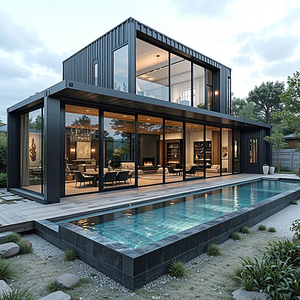
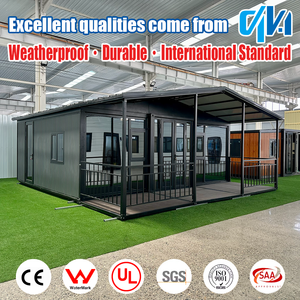
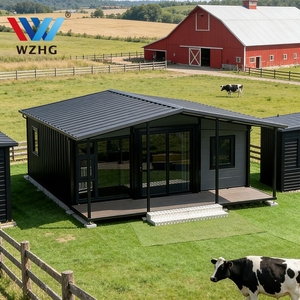
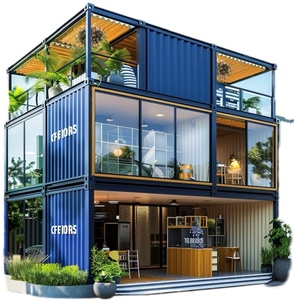
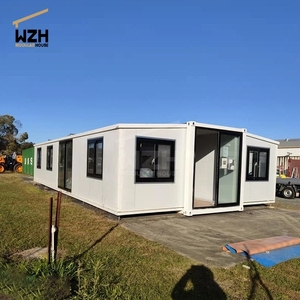
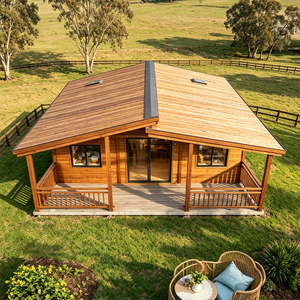
The Netherlands is experiencing a boom in off-site modular home manufacturing and 3D volumetric building. Our telescopic extendable flatbed trailers extend up to 36 meters, accommodating full-size prefabricated container houses, timber modules, and steel frame modules with integrated twist locks and outriggers.
Offshore Wind & Green Energy
With massive wind developments across the North Sea and Dutch coastlines (such as Maasvlakte and IJmuiden), transport of wind turbine blade sections, nacelles, and tower segments requires ultra-long blade lifters and specialized hydraulic drop-deck low loaders engineered to withstand high wind shear during transport.
Port Machinery & Dredging Equipment
Rotterdam is the dredging capital of the world (home to Boskalis and Van Oord). Moving heavy excavators, cutter suction dredger parts, transformator units, and industrial winches demands detachable gooseneck lowboys (RGN) with hydraulic front ramps capable of concentrated 80-tonne point loads.
Technical Specification & Structural Engineering Matrix
To assist logistics directors and fleet procurement managers in selecting the optimal heavy-duty trailer structure for European operations, the matrix below outlines our standard engineering benchmarks versus industry baseline specifications:
| Engineering Metric |
Standard Commercial Trailer |
Our Heavy Duty NL-Spec Trailer |
Operational Gain for Buyers |
| Main Beam Material |
Q345B Carbon Steel (Yield 345 MPa) |
S690QL / S700MC High-Tensile Steel |
Higher payload capacity with 18% lower tare mass; zero structural sagging under peak loads. |
| Welding Precision |
Manual Arc Welding |
Robotic Submerged Arc Welding (SAW) |
100% seam penetration certified by Ultrasonic & X-Ray NDT testing; eliminates fatigue cracking. |
| Surface Protection |
Standard Synthetic Primer + Paint |
Shot-Blasting (SA 2.5) + Zinc Spray + Polyurethane |
Maximum protection against harsh North Sea salt fog, winter road de-icing salts, and humidity. |
| Steering Mechanism |
Fixed Rigid Axles or Simple Self-Steer |
Hydraulic Forced Wedge Steering (60° Angle) |
Allows 18m+ combinations to easily maneuver Dutch inner-city roundabouts and tight port gates. |
| Braking & Safety |
Basic Mechanical ABS |
WABCO / KNORR-BREMSE EBS + RSS |
EBS with Roll Stability Support prevents rollover on curved highway ramps and off-camber dike roads. |
Factory Expertise, QA Governance & Global Supply Chain Reliability
With over two decades of specialized trailer manufacturing experience, our state-of-the-art 120,000 m² production complex operates under strict ISO 9001:2015 Quality Management Systems and EN ISO 3834-2 Welding Quality Standards. We understand that for a Dutch transport company, trailer downtime represents severe financial penalties.
End-to-End Quality Verification Protocol
Every trailer custom-built for export to the Netherlands undergoes a rigorous 5-stage quality audit before leaving our facility:
- Spectrometric Material Verification: Checking steel mill certificates (MTC) to guarantee genuine SSAB Strenx® or equivalent S690QL structural steel usage.
- Dimensional Laser Alignment: Digital chassis laser tracking ensuring micro-millimeter precision across axle centerlines, preventing premature tire wear.
- Hydraulic Pressure Endurance Test: Pressurizing hydraulic neck and steering lines to 250 Bar over a 24-hour hold period to test for zero seal leakage.
- Load Cell Simulation: Simulating 150% maximum rated load capacity on our dynamic test bed to record frame deflection parameters.
- Full Road Salt Spray Testing: Verifying anti-corrosion coating durability in climate chambers to ensure compliance with European automotive longevity benchmarks.
Furthermore, our global logistics network handles direct maritime shipping into the Port of Rotterdam or Vlissingen, offering complete CPT/CIF terms including full RDW registration paperwork, Certificate of Conformity (CoC), and customs documentation support.