
Sydney · 0402 531 010 Talk To Us
Integrated structural container solutions pre-engineered for rapid deployment, high thermal performance, and direct coupling with micro-wastewater treatment plants.
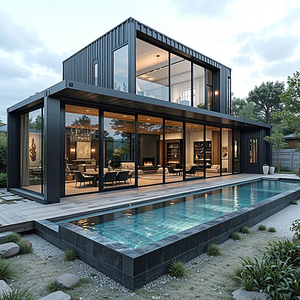
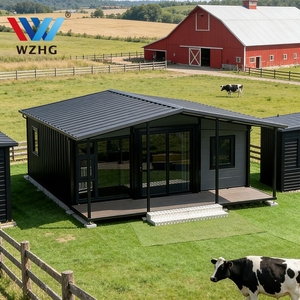

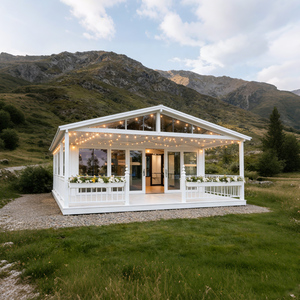
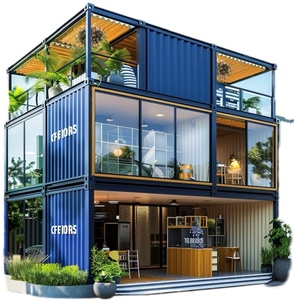
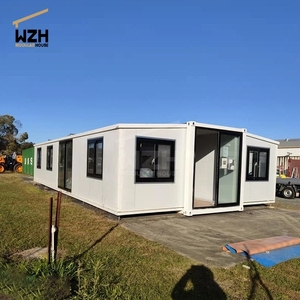
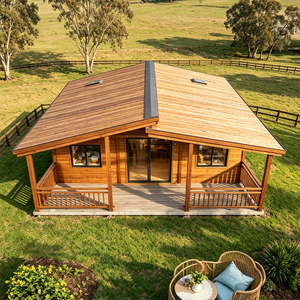
Understanding the interplay between high-altitude prefabricated living, strict municipal environmental mandates, and cold-weather wastewater processing.
The rapid adoption of modular container homes, expandable tiny houses, and prefabricated light-steel villas across Austria—from the alpine stretches of Tyrol and Vorarlberg to the agricultural plains of Lower Austria—has highlighted a critical infrastructure challenge: off-grid wastewater management. As Austrian building regulations (Bauordnung) enforce stringent environmental standards, developers and private buyers purchasing modular structures from leading Chinese manufacturers require turnkey, fully compliant septic tank and micro-wastewater treatment systems.
Austrian winter climates demand subterranean septic tanks fabricated from high-density polyethylene (HDPE) or Glass-Reinforced Plastic (GRP), engineered with deep-burial structural ribbing and thermal neck risers to prevent tank freeze-up and structural cracking.
Standard holding tanks fail long-term utility requirements. Chinese OEM manufacturers serving Austria configure three-chamber septic systems featuring primary sedimentation, anaerobic biological decomposition, and integrated clarifiers to yield discharge-ready effluent.
Container houses are exported with factory-fitted DN110/DN160 gray/blackwater PVC collection manifolds designed for direct plug-and-play alignment with external septic inlet ports, reducing on-site civil works in Austria by up to 70%.
Selecting the optimal container house septic tank requires evaluating peak hydraulic loads, occupant equivalent units (PE), and thermal soil coefficients. Below is the technical specification breakdown for our direct-export subterranean septic tanks designed to integrate seamlessly with 16ft, 20ft, and 40ft container residences exported to Austria:
| System Capacity | Occupancy (PE) | Tank Material | Thermal Operating Range | Standards Compliance | Recommended House Type |
|---|---|---|---|---|---|
| 1,500 Liters | 1 - 2 Persons | Seamless Rotomolded HDPE | -25°C to +50°C | ÖNORM B 2505 / EN 12566-1 | 16ft Mini Cottage / 20ft Studio |
| 3,000 Liters | 3 - 5 Persons | Ribbed Heavy-Duty HDPE | -30°C to +50°C | EN 12566-3 / CE Certified | 20ft & 40ft Expandable Container |
| 5,000 Liters | 6 - 8 Persons | Filament-Wound GRP / FRP | -40°C to +60°C | EN 12566-3 / ISO 9001 | Multi-Unit / 3-Storey Prefab Annex |
| 10,000+ Liters | Commercial / Camps | Modular Linked GRP System | -40°C to +60°C | EU Environmental Discharge Code | Modular Worker Camps & Resorts |
Deploying modular container home septic systems in rocky alpine regions like Salzburg or Carinthia involves specific geotechnical parameters. The tank must resist ground heave caused by frost freeze-thaw cycles while providing complete hydraulic isolation from local groundwater tables.
Domestic blackwater from the container home's low-flow toilet and kitchen sink enters the primary chamber. Heavy solids settle into a sludge layer, while oils and greases float to create a scum barrier. High hydraulic retention times (HRT > 48 hours) ensure efficient initial gravity separation.
Effluent overflows into secondary and tertiary chambers packed with structured bio-media carrier rings. Specialized anaerobic microbes decompose organic matter (BOD5 reduction up to 85%), neutralizing pathogens without requiring external electrical grid power.
How Chinese container homes paired with high-performance septic systems solve off-grid housing needs across diverse Austrian topographies.
Remote ski lodges and mountain retreats operating off-grid require lightweight, high-insulation expandable 20ft homes coupled with frost-protected 3,000L subterranean septic tanks installed below the local frost line (1.0m - 1.2m depth).
Vineyards and timber operations utilize flat-pack luxury container cottages as seasonal worker housing or tasting rooms. Bundled rotomolded septic tanks allow compliance with local agricultural land-use ordinances without full municipal sewer connection fees.
Homeowners expanding living footprints in suburban residential zones install 40ft expandable container houses in backyards. High-density PE septic systems provide autonomous waste handling where main lateral connection slopes are insufficient.
The European modular housing sector is experiencing a paradigm shift towards circular resource management. Austrian federal environmental policy favors prefabricated housing solutions that incorporate low-carbon manufacturing alongside zero-leakage sanitation facilities.
Key regulatory and market developments impacting Austrian importers include:
Combining world-class steel fabrication efficiency with specialized polymer rotomolding technology under one export umbrella.
Exporting container homes alongside heavy septic equipment requires precision spatial consolidation. Our factories load subterranean septic tanks inside collapsed flat-pack or expandable container cavities during ocean transit, saving up to 45% in sea-freight volume charges to European ports (Rotterdam/Koper) and overland transport across Austria.
Every structural frame undergoes automated robotic welding and hot-dip galvanization (min. 120g/m² zinc coating) to resist corrosion. Septic tanks are produced using 100% virgin LLDPE/HDPE resins, subjected to wall-thickness ultrasonic testing, vacuum leak tests, and structural compression analysis prior to export packaging.
Addressing common technical, legal, and logistic inquiries regarding container house septic installations in Austria.
Yes. However, the imported septic tank or micro-wastewater treatment system must comply with European Standard EN 12566 and carry CE marking. When purchasing from our manufacturing facility, we supply complete factory test certificates, structural calculations, and material safety data sheets required by your local Austrian municipal building authority (Gemeinde) for site permit approvals.
Subterranean septic tanks installed in alpine zones (e.g., Tyrol, Carinthia) are buried below the regional frost depth line (typically 0.8m to 1.2m below ground surface). Additionally, our tanks feature extended inspection neck risers and can be outfitted with extruded polystyrene (XPS) insulation jackets around the upper tank dome to preserve internal bacterial heat during winter low cycles (-20°C).
Yes. All modular houses leave our factory with standardized schedule-40 / standard PVC DWV piping manifolds (DN110 or DN160 millimeter diameter) extended through the floor or chassis wall. The subterranean septic tank features pre-molded flexible elastomeric rubber grommets for quick push-fit connection with standard sewer piping on site.
Standard production time for customized container homes bundled with septic systems is 15 to 25 days. Ocean freight from Ningbo or Shanghai port to European gateway ports (such as Koper, Slovenia, or Hamburg, Germany) takes approximately 28 to 35 days, followed by direct intermodal rail/truck transport to your installation site anywhere in Austria.
Due to high-efficiency anaerobic bio-filtration, sludge accumulation is minimized. For standard residential occupancy (3-4 persons), primary chamber pump-out (desludging) is only required once every 2 to 3 years. The integrated filter media can be easily backwashed or rinsed via the top access neck during routine annual inspections.
Consult with our senior modular engineering team today. Receive tailored floor plans, EN compliance documentation, and comprehensive factory-direct pricing for your project.
Contact Us